From Concept to Keys: How We Build an Aussie Tiny House
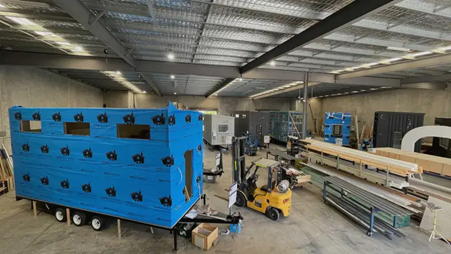
Tiny houses aren’t just small homes—they’re carefully crafted spaces that balance comfort, style, and functionality. At Aussie Tiny Houses, we’ve spent years perfecting the art of creating homes that are not only compact but also built to last in the unique Australian climate. In this article, we’ll take you through our process, from the first spark of an idea to the moment you receive the keys to your new tiny home.
Understanding Your Vision: The Initial Consultation
Every great tiny house begins with a conversation. Our process starts with an in-depth consultation where we take the time to understand your lifestyle, priorities, and vision. Are you downsizing to embrace a minimalist lifestyle? Seeking a sustainable holiday home? Or perhaps planning a mobile tiny home to explore Australia? Your answers help shape not just the design, but the type of home we build. From there, we ask detailed questions to bring your vision into focus — how many bedrooms or sleeping areas you need, what kind of kitchen and bathroom facilities you have in mind, and whether there are any accessibility needs or lifestyle features that matter most to you. This stage is about capturing your dream in practical terms. By listening carefully, we ensure that every design element aligns with your needs while remaining functional and efficient.” From there, we ask detailed questions to bring your vision into focus — how many bedrooms or sleeping areas you need, what kind of kitchen and bathroom facilities you have in mind, and whether there are any accessibility needs or lifestyle features that matter most to you. This stage is about capturing your dream in practical terms. By listening carefully, we ensure that every design element aligns with your needs while remaining functional and efficient.Designing Your Tiny Home: Expertise in Action
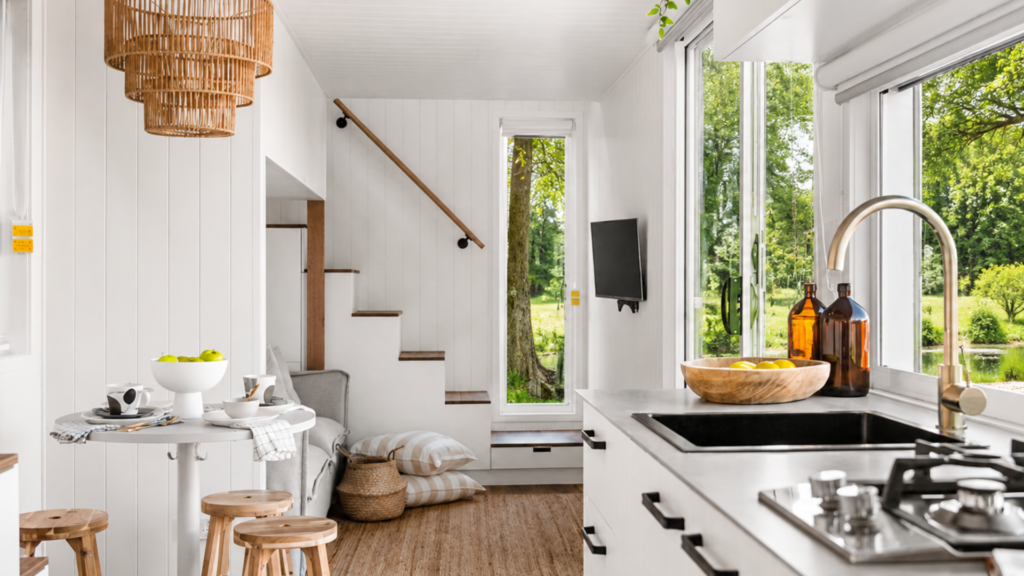
Once we understand your vision, our design team gets to work — whether that’s refining one of our existing designs or developing something tailored to you. Tiny houses may be small, but their design is complex. Every square metre must serve multiple purposes, so we focus on intelligent layouts, clever storage solutions, and efficient flow. We use detailed floor plans and design drawings to help you visualise your home before construction begins. This stage allows you to see how living areas relate to one another, where storage solutions will be integrated, and how natural light will enter and move through the space. All our tiny houses are structurally sound and built to comply with local regulations. This includes carefully selected materials that withstand Australia’s harsh sun, high humidity, and occasional heavy rain. By combining aesthetics with practical considerations, we create homes that are both beautiful and durable.Material Selection: Balancing Quality and Sustainability
Materials make a significant difference in the longevity and comfort of a tiny house. At Aussie Tiny Houses, we prioritise high-quality materials that offer durability without compromising style — because a tiny house should be built to last. Every build features BlueScope TRUECORE Australian steel frames, chosen for their superior structural integrity and because they keep each home within the 4.5 tonne limit required under caravan regulations. External cladding is Colorbond, while VJ panels bring warmth and character to interior walls. Wall insulation is rated at R2.5 for year-round comfort. Each home is also engineered to withstand storms, with two heavy-duty anchor points beneath the trailer for added stability in high-wind locations. We work closely with our suppliers to source products that meet our exacting standards, ensuring your home continues to perform beautifully for years to come.Approvals and Permits: Navigating Local Regulations
One of the most challenging aspects of building a tiny house is navigating compliance with local council regulations. Australia’s rules vary widely between states and municipalities, and understanding what applies to your situation early on can save significant time and costly modifications down the track. As part of our process, we provide clear guidance on the regulatory requirements relevant to your build — whether you’re going down the THOW path or pursuing a Class 1A council-approved dwelling. We help you understand what documentation may be needed and what questions to ask your local council, so you can move forward with confidence that your tiny house is on the right side of compliance.The Build Process: Crafting Your Tiny Home
Construction is where your vision becomes reality — and where our expertise truly shines. Our skilled builders bring years of experience in tiny house construction to every project, with meticulous attention to detail at every stage. Whether you’re building a Tiny House on Wheels or a Class 1A dwelling, the build process follows the same commitment to quality and craftsmanship. The build moves through several key phases.- Foundation and chassis preparation: It starts with chassis preparation, ensuring a stable, level base for long-term structural integrity.
- Framing and structure: From there, our team constructs the framework using precision techniques to guarantee a strong, safe structure. Exterior work follows, with Colorbond cladding, roofing, and weatherproofing completed to withstand Australia’s climate extremes.
- Exterior work: Exterior work follows, with Colorbond cladding, roofing, and weatherproofing completed to withstand Australia’s climate extremes.
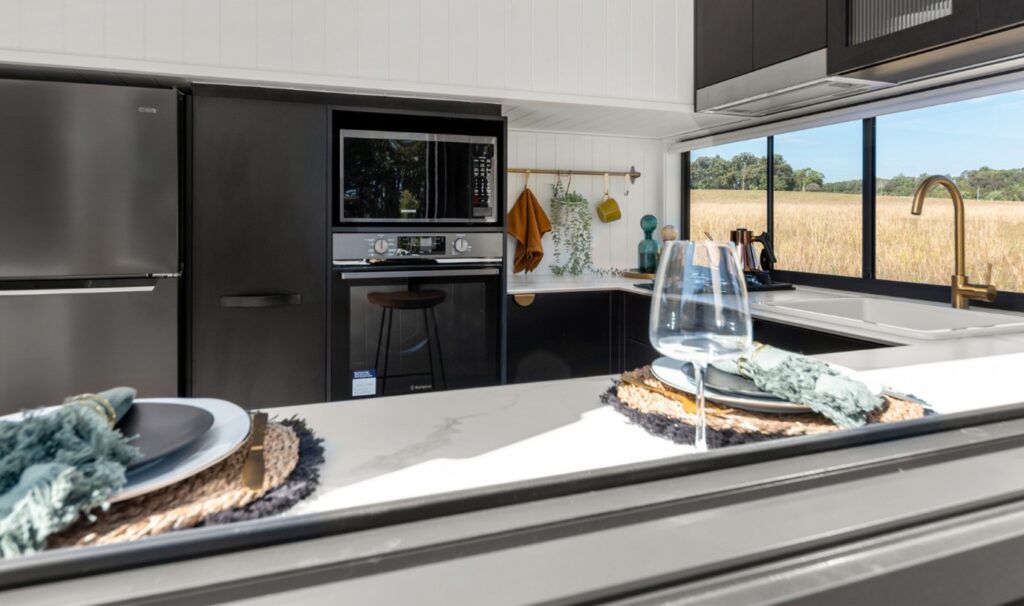
- Interior fit-out: The interior fit-out then brings the home to life, with cabinetry, flooring, electrical, plumbing, and appliances installed with careful attention to both functionality and style.
- Final touches: Finally, lighting, paint, and finishing touches are added to make your tiny house feel like home.
Quality Assurance: Testing and Inspection
Before handing over your tiny house, we conduct rigorous quality assurance checks. Every element is inspected to ensure it meets our high standards:- Structural integrity of the frame and foundation
- Functionality of plumbing, electrical, and appliances
- Weatherproofing and insulation effectiveness
- Finishing details such as cabinetry, trim, and flooring