The Freedom to Live Differently
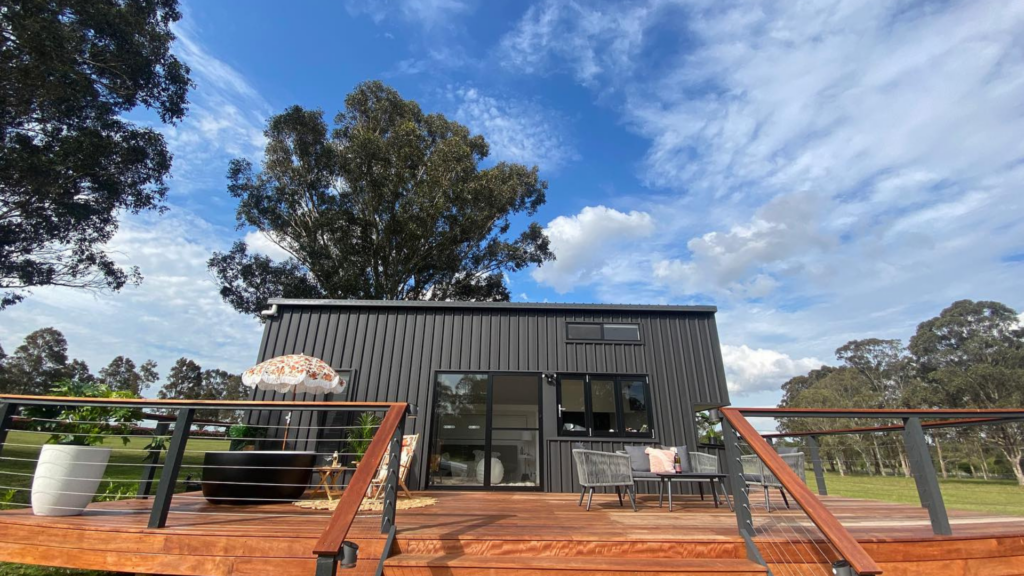
Across Australia, more people are rethinking what “home” really means. Rising house prices, shifting values, and a growing desire for flexibility have fuelled the Australian tiny house movement, with more people embracing tiny house living in Australia as a conscious lifestyle choice rather than a compromise. Whether it’s a coastal retreat, a backyard tiny house, or a move towards off-grid independence, tiny homes are reshaping how Australians live, work and invest.
From tiny homes on wheels (THOWs) designed for freedom of movement to thoughtfully designed, energy-efficient tiny homes made for long-term comfort, the appeal lies in choice. Choice to live lighter, smarter, and more intentionally — without being locked into traditional housing models.
But while caravans and Tiny Houses on Wheels may look similar, the lifestyle, regulations and long-term suitability are very different.
Tiny Houses on Wheels and Caravan Regulations in Australia
In Australia, a tiny house on wheels must comply with national road and vehicle standards if it is to be legally towed. This is a critical part of tiny home regulations in Australia and often misunderstood by first-time buyers. To remain registerable as a caravan or trailer, tiny houses on wheels in Australia generally must meet the following limits:- Maximum width: 2.5 metres
- Maximum height: 4.3 metres
- Maximum length: 12.5 metres including drawbar
- Maximum weight: Within the trailer’s Aggregate Trailer Mass (ATM), typically up to 4.5 tonnes
Tiny House on Wheels vs Caravan: Lifestyle First, Not Just Legal
Although both sit on trailers, caravans and tiny houses on wheels are designed for fundamentally different purposes.Caravans are optimised for:
- Travel and short-term stays
- Lightweight construction
- Frequent towing and mobility
Tiny houses on wheels are designed for:
- Full-time or semi-permanent living
- Use as tiny house granny flats, guest accommodation or rentals
- Comfort, storage and liveability over long periods
Council Considerations and Location Matters
One of the most common questions relates to council-approved tiny homes. Because they remain on wheels and are not permanently fixed to the land, they are generally classified as caravans or movable dwellings, meaning they fall under road transport legislation rather than standard residential building codes. While registration governs movement on the road, councils regulate how and where a THOW can be lived in. Many councils permit short-term stays — often limited to a set number of weeks per year — but require additional approvals if the tiny house is used as a permanent residence, connected to services, or positioned as a secondary dwelling on private land. Local laws vary significantly from one council to the next. Because of this variation, speaking directly with your local council before committing to a build or purchase is essential. Understanding the local planning framework early can save time, cost and frustration — and ensures your tiny home lifestyle starts on solid ground rather than in regulatory limbo.Cost Comparison: Caravans vs Tiny Houses in Australia
Understanding tiny house cost in Australia means comparing like for like. While a Tiny House on Wheels can cost more than a basic caravan, it is generally on par with the price of a high-end or luxury caravan. The difference lies in what you’re buying: a purpose-built home rather than a touring vehicle. With superior insulation, long-term durability and tailored design, a THOW offers lasting value — particularly for those pursuing sustainable living with tiny houses or more self-sufficient tiny homes.Caravan prices:
- Entry-level caravans: $30,000 – $60,000
- Mid-range off-road caravans: $80,000 – $120,000
- Luxury caravans: $150,000+
Tiny house pricing:
- Budget or affordable tiny homes Australia: from around $80,000
- Well-appointed contemporary tiny house builds: $120,000 – $165,000+
- Luxury off-grid tiny homes with solar, water and storage systems: higher again
What Type of Tiny Home Suits You?
Before committing to a build or purchase a THOW, it’s worth pausing to think about how it will function in your day-to-day life, where it will live, and what role it will play long term, so ask yourself:- Do you want mobility or permanence? Caravans prioritise movement. Tiny houses prioritise living.
- Will it be placed on private land? Backyard tiny houses and tiny home granny flats may involve council oversight.
- Am I seeking sustainability? Many buyers choose solar-powered tiny homes, off-grid tiny houses, or eco-friendly tiny homes to reduce running costs and environmental impact.
- Is this a lifestyle or an investment? THOWs are increasingly used for tiny house investment in Australia, rentals, or retirement living.
Financing a Tiny House on Wheels (and How It Compares to Caravans)
Tiny Houses on Wheels are typically financed in the same way as caravans, not traditional homes. Because a THOW is classified as a movable dwelling rather than a fixed residential property, standard home mortgages usually don’t apply. Instead, financing is structured around asset or personal lending — much like purchasing a caravan or RV. Common financing options in Australia include:- Caravan or RV loans (secured): As THOWs are legally treated in line with caravans, secured caravan loans are one of the most common and cost-effective options. These loans use the tiny house as the asset, often offering better interest rates than unsecured lending. This approach is the same for caravans and THOWs.
- Personal loans (unsecured): Some buyers choose unsecured personal loans for flexibility, particularly for smaller or staged builds. These don’t require the tiny house as security but usually come with higher interest rates. This option also applies equally to caravans.
- Equity release or refinancing: If you already own a home or land, using existing equity can be one of the most affordable ways to fund a tiny house or caravan, as rates are typically lower than personal or asset loans.
- Builder-supported finance: Some tiny house builders offer tailored finance solutions or work with lenders familiar with THOWs, which can simplify the process.
- Green or sustainability-focused loans: For solar-powered, off-grid or energy-efficient tiny homes, certain lenders offer green finance options that may include discounted rates or incentives.
The Bigger Picture: Why Tiny Homes Are Here to Stay
From modular tiny houses and prefab tiny homes to fully custom tiny homes QLD, the growth of small homes in Australia reflects a deeper cultural shift. People aren’t just buying smaller spaces — they’re choosing:- Freedom over debt
- Design over excess
- Lifestyle over square metres