Understanding Tiny House Delivery Costs in Australia
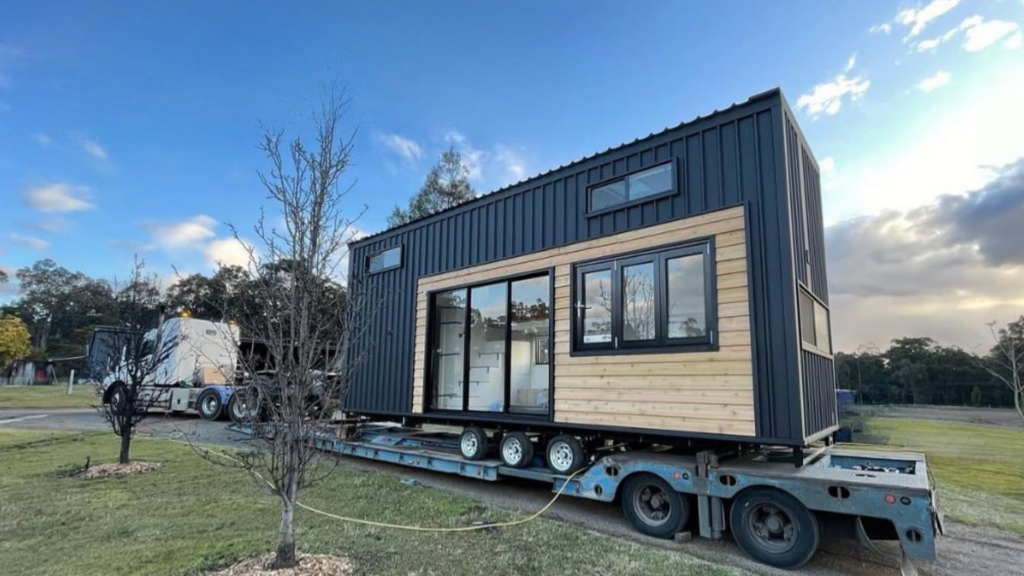
During your tiny house journey, it’s easy to get swept up in design choices, layouts, and finishes. But there’s another important piece of the puzzle to keep in mind — getting your tiny house to its new home.
Getting your newly built home from the builder’s workshop to your property isn’t as straight forward as booking a removalist. Tiny houses on wheels can weigh up to 4.5 tonnes and need specialist towing, which means delivery is an important part of your overall investment and planning.
Many of the customers we speak with are often taken aback by delivery costs, often reasoning it should be no more than towing a caravan. While a tiny house on wheels is built to the same regulations as a caravan — complete with a VIN and road towable — other factors make transport more complex.
Let’s explore everything that goes into delivery costs, look at how transport works, and share tips to plan and budget with confidence.
Factors That Influence Tiny House Delivery Costs
-
Distance to Your Site
-
Fuel and Travel Costs
-
Delivery Methods
-
Property Access
Typical Delivery Costs
While every delivery is different, here’s a rough idea of what to expect:- Within 100 km – $1,000 to $2,000
- Interstate (e.g., Queensland to NSW) – $3,000 to $6,000
- Long-distance cross-country (e.g., Queensland to WA) – over $10,000+
Ways to Keep Delivery Costs Manageable
If you’re looking to keep costs down without compromising safety, here are some strategies:- Choose a builder close to your final location – The less distance to travel, the more you’ll save, though bear in mind that it may not always guarantee the highest build quality.
- Plan ahead for site access – Clearing trees, widening driveways, or levelling the ground beforehand avoids delays and extra charges.
- Collect the tiny house yourself – if you have a vehicle capable of towing up to 4.5 tonnes.
Hidden Costs to Look Out For
Even though delivery quotes are usually straightforward, it’s wise to clarify what’s included. Possible extras could include:- Waiting time – If the driver is delayed onsite, extra fees may apply.
- Specialised unloading equipment – While not common, some tricky sites require cranes or other machinery.
- Overnight accommodation for drivers – On long trips, this cost can be factored into the quote.
The Delivery Process
A typical delivery for a tiny house on wheels goes like this:- Final Inspection – The builder checks everything is secure and road-ready.
- Route Planning – The driver plans the safest and most efficient route, factoring in the house’s size and weight.
- Towing – The home is carefully hitched and transported, often at slower speeds to ensure stability.
- Arrival and Positioning – Once on site, the home is manoeuvred into its final position using the towing vehicle and other equipment if needed.
- Handover – The delivery crew ensures the home is level and stable before leaving.